
Renting Traffic Control Equipment in Alberta: What Your Work Zone Needs
TrafficIQ · · 5 min read
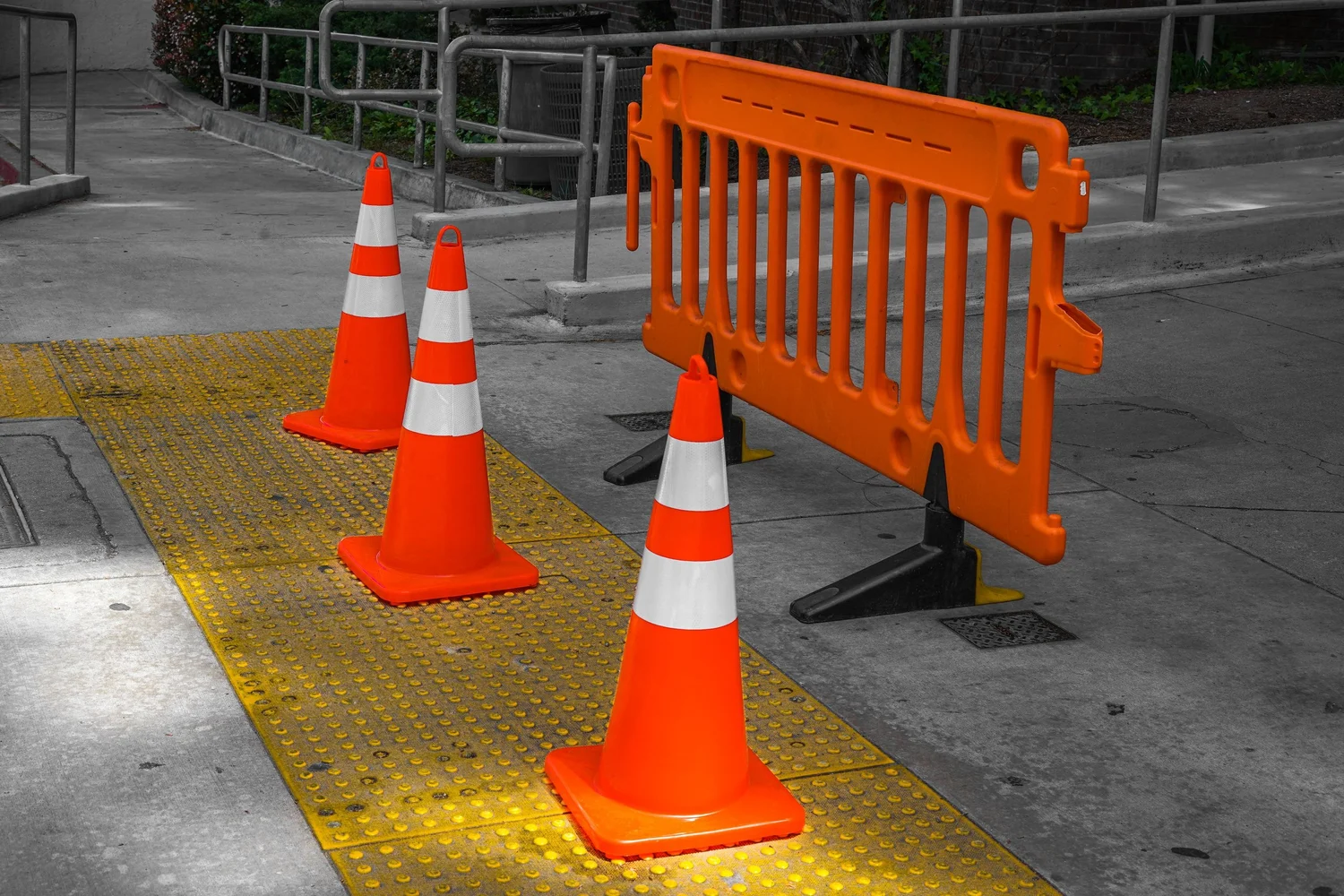
Plenty of jobs need traffic control equipment without a full traffic control crew: a utility repair on a quiet street, a sidewalk closure for a few days, a driveway pour that takes up a lane. Renting gets the right devices to site without buying and storing them. This guide covers what a typical short-term work zone in Alberta needs, the rules that set sizes and placement, and when equipment on its own isn't enough.
Start with the plan, not the equipment list
The equipment list comes out of the traffic plan. The plan, or the typical layout it follows, sets which signs go where, how long the taper is and how many devices the job needs. Which manual applies depends on the road:
- Provincial highways. Alberta's Traffic Accommodation in Work Zones manual (2025) sets minimum requirements for work on the highway network.
- Edmonton roads. The City's Manual of Temporary Traffic Control applies, and work in the road right-of-way often needs an OSCAM permit. See How to Get an OSCAM Permit in Edmonton.
- Calgary roads. The City's Temporary Traffic Control Manual applies, along with a street use permit.
- Other municipalities. Many Alberta towns and cities publish their own temporary traffic control guidelines. Check with the municipality before you order.
Alberta's OHS Code sets the baseline for every site. Where traffic on a public road is a danger to workers, the employer must protect them with measures such as warning signs, barriers, lane control devices, flashing lights or people designated to direct traffic.
What a short-term closure usually needs
| Equipment | What it does | What to check |
|---|---|---|
| Advance warning signs | Tell drivers what's ahead before they reach it | Sign types and spacing come from the plan or typical layout |
| Sign stands and weights | Hold portable signs upright | Use industry-standard stands, weighted so wind can't tip them |
| Cones and tubular markers | Mark the taper and separate traffic from the work area | Height depends on speed (see below) |
| Drums | Heavier, more visible delineation for tapers | Required for tapers on some higher-speed highway work |
| Barricades | Block access to a closed area or road | A full road closure needs barricades across the whole road surface |
| Arrow boards and message boards | Guide traffic around a lane closure | Required for lane closures on multi-lane highways |
| Warning lights | Keep devices visible after dark | Needed when the setup stays out overnight or work runs at night |
Size and setup rules that catch people out
On provincial highways, the Traffic Accommodation in Work Zones manual sets several specifics:
- Cone height. Where the work-area speed is over 50 km/h, cones must be at least 70 cm tall. At 50 km/h or less, 45 cm is the minimum. Cones and other delineators must be reflectorized.
- Signs come first. Delineators aren't used without the advance warning signs that go with them.
- Sign height. On short-duration projects, signs sit 0.3 m above the roadway. On long-duration projects, they sit at 1.5 m. Any traffic control left in place overnight goes on posts or industry-standard stands at 1.5 m.
- Arrow boards. Lane closures on multi-lane highways need a sequential arrow board, always used with other devices and never where traffic is opposing.
- Water-filled barricades. Allowed only where the posted highway speed is 60 km/h or less and the drop-off is under 300 mm. They stay full, and need non-freezing ballast if temperatures may drop below zero.
The manual treats stationary work attended for more than 30 minutes in a single daylight period as short duration. Work that stays in one spot for 30 minutes or less, setup and removal included, is very short duration.
Inspect what you set up
Renting the equipment doesn't hand off responsibility for it. On highway work, signing is inspected and recorded at the start and end of each workday and whenever signs are moved, with extra checks during snow, rain or wind. Night inspections, done at least every two weeks with low-beam headlights, check reflectivity and lamps. Whoever runs the site should name who does these checks. See Who Is Responsible for Traffic Control on an Alberta Job Site?
When equipment isn't enough
Some closures need people as well as devices:
- Two-way traffic has to share one lane, and signs alone can't control who goes when. See When Do You Need a Flagger?
- The plan or permit calls for traffic control persons.
- The job is complex or long enough to need a site-specific plan. See What Is a Traffic Accommodation Strategy?
- The closure affects a sidewalk or bike lane, and pedestrians or cyclists need to be directed around it. See Pedestrians and Cyclists Around Alberta Work Zones.
Before you order: a checklist
- Which road authority's manual and permit apply.
- The plan or typical layout you're working from.
- Posted speed and the number of lanes.
- Dates, hours, and whether devices stay out overnight.
- Delivery address and who will be on site to receive it.
- Who inspects and maintains the setup once it's in place.
Equipment rentals from TrafficIQ
TrafficIQ rents traffic cones, signage, barriers and delineators that meet provincial safety specifications, delivered to your job site on daily, weekly or project-length terms. Tell us your project type, location and duration and we'll confirm what your work zone needs. See Equipment Rentals, add certified traffic control persons through Flagging & Site Services, or request a quote.
Last reviewed October 2026. This article is general information. Confirm requirements with the road authority for your site.
Sources: Government of Alberta, Traffic Accommodation in Work Zones 2025; Alberta OHS Code, Part 12; City of Calgary, Road contractors and consultants; City of Edmonton, OSCAM Permit.