
Pedestrians and Cyclists Around Alberta Work Zones
TrafficIQ · · 5 min read
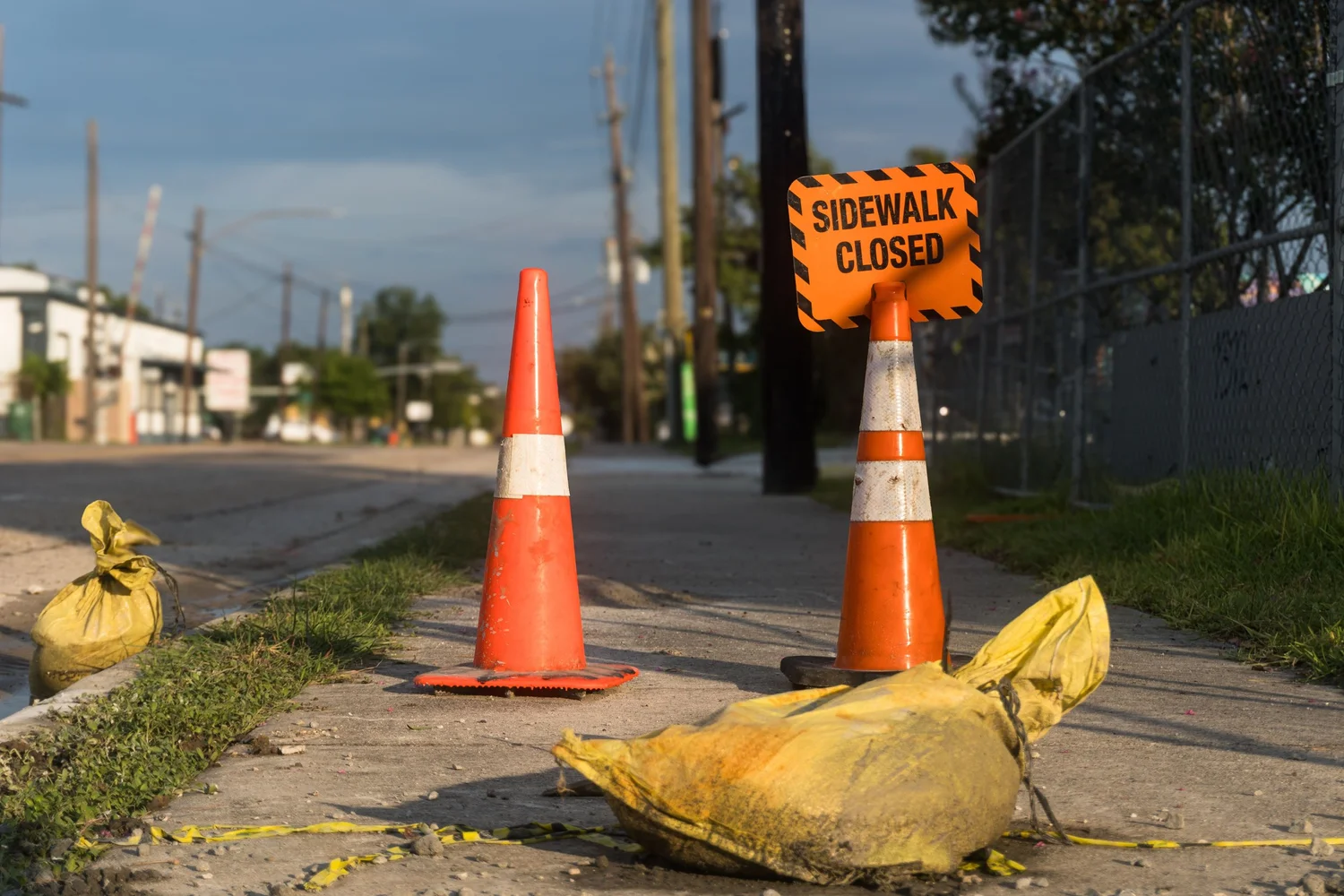
A lane closure that works for drivers can still leave people on foot or on bikes with nowhere safe to go. A sidewalk blocked by a bin, a bike lane that ends at a row of cones, a detour with no ramp at the curb: these are the gaps the public notices, and so does the City. This guide covers what Alberta's rules expect for pedestrians and cyclists around a work zone, with a closer look at Edmonton, where the City's manual sets detailed requirements.
The baseline: safe passage, kept apart from the work
On provincial highways, Alberta's Traffic Accommodation in Work Zones manual requires safe passage for pedestrians and cyclists through or around work areas. Where they pass through, they must be physically separated from workers and equipment. Where they can't, an alternate route has to be available, with signs telling them about the closure and the way around it.
Alberta's OHS Act also requires employers to protect members of the public at or near their work site, not only their own workers. That puts pedestrians and cyclists in the traffic plan from the start.
Edmonton: what the City expects
In Edmonton, a traffic accommodation document is required for any traffic lane, bike lane, sidewalk or road closure, and it goes in with the OSCAM application. See How to Get an OSCAM Permit in Edmonton.
The City's Manual of Temporary Traffic Control asks crews to put pedestrians and cyclists first wherever they can. Pedestrians must be accommodated when work affects a sidewalk, shared pathway, shared space or crosswalk. Cyclists must be accommodated when work affects a designated bike route, including protected and painted bike lanes, shared roadways and shared pathways.
Match the treatment to the duration
| Type of work | Usual treatment |
|---|---|
| Mobile and very short duration | Flaggers or workers stop and direct pedestrians and cyclists |
| Short duration | A temporary walkway or bike route set out with lightweight devices: signs, cones, light barricades |
| Long duration | A temporary walkway or bike route set out with sturdier barricades and channelizing devices |
The manual discourages "cross to the other side" sidewalk closures and "cyclists dismount and walk" treatments, especially on long-duration work. Where a dismount section can't be avoided, keep it to 50 m or less. Every bike detour needs City review and approval before it goes in, and it should offer comfort, safety and travel distance comparable to the route it replaces.
Minimum widths
| Facility | Width |
|---|---|
| Pedestrian walkway | 1.5–1.8 m |
| Bike route, one-way | 1.5–1.8 m |
| Bike route, two-way | 2.0–3.0 m |
| Shared path for pedestrians and cyclists | 2.0–3.0 m |
Use the widest width the site allows, and more in busy locations.
Accessibility
- Temporary walkways should be wheelchair accessible, with a smooth, hard surface clear of debris.
- Provide a ramp, or use an existing curb ramp, wherever pedestrians move onto a temporary walkway. Ramps and bridges should be no steeper than 1:12 and have colour contrast.
- On long-duration work, channelizing devices should be detectable with a cane and run continuously, with no gaps.
- Keep clear, accessible paths to bus stops, and keep signal push buttons within reach.
- Where a trench or excavation crosses a sidewalk, install a pedestrian bridge with handrails.
Keep signs off the walkway
Place signs in the boulevard, or on green space behind the sidewalk, rather than on the sidewalk or bike lane. If there's no other option, the walkway left beside the sign still has to meet the minimum width.
Give notice before you close
Closing a sidewalk on one or both sides, or closing bike infrastructure, counts as a total closure under the manual. For a total closure, affected businesses and residents get written notice at least 10 working days before work starts. If the work affects a bus route, Edmonton Transit Service needs to know too.
Keep it usable for the whole job
- Clear snow, ice, gravel and tracked mud from temporary walkways and bike routes promptly.
- Keep drainage working so water doesn't pond where people walk or ride.
- Light covered walkways and temporary routes so they're usable after dark.
- Check that devices are clean, visible and in place at the start and end of each day.
Winter makes all of these harder. See Winter Traffic Control in Alberta.
When a flagger is the better answer
Pedestrians often don't follow signs well. When work blocks a sidewalk for a short time, such as while equipment is being hoisted, a flagger can stop people and tell them clearly when and where to go. Flaggers directing cyclists use the same procedures they use for drivers. See When Do You Need a Flagger?
Before work starts: a checklist
- Mark every sidewalk, crosswalk, pathway and bike lane the work affects.
- Choose a treatment for each that suits how long the work will last.
- Check the walkway and bike route widths you can keep open.
- Plan ramps, a level surface, and cane-detectable edges for long-duration work.
- Keep bus stops reachable, and notify transit if a route is affected.
- Send written notice to neighbours on time for any total closure.
- Name who clears, lights and inspects the temporary routes.
How TrafficIQ can help
TrafficIQ prepares traffic plans and supplies certified traffic control persons who manage vehicle and pedestrian flow through work zones in Edmonton and across Alberta. See Traffic Management and Flagging & Site Services, or request a quote with your location, dates and the sidewalks or bike lanes involved.
Last reviewed October 2026. This article is general information. Confirm requirements with the road authority for your site.
Sources: Government of Alberta, Traffic Accommodation in Work Zones 2025; Government of Alberta, Obligations of work site parties; City of Edmonton, OSCAM Permit; City of Edmonton, Manual of Temporary Traffic Control.