
Winter Traffic Control in Alberta: What to Plan For
TrafficIQ · · 5 min read
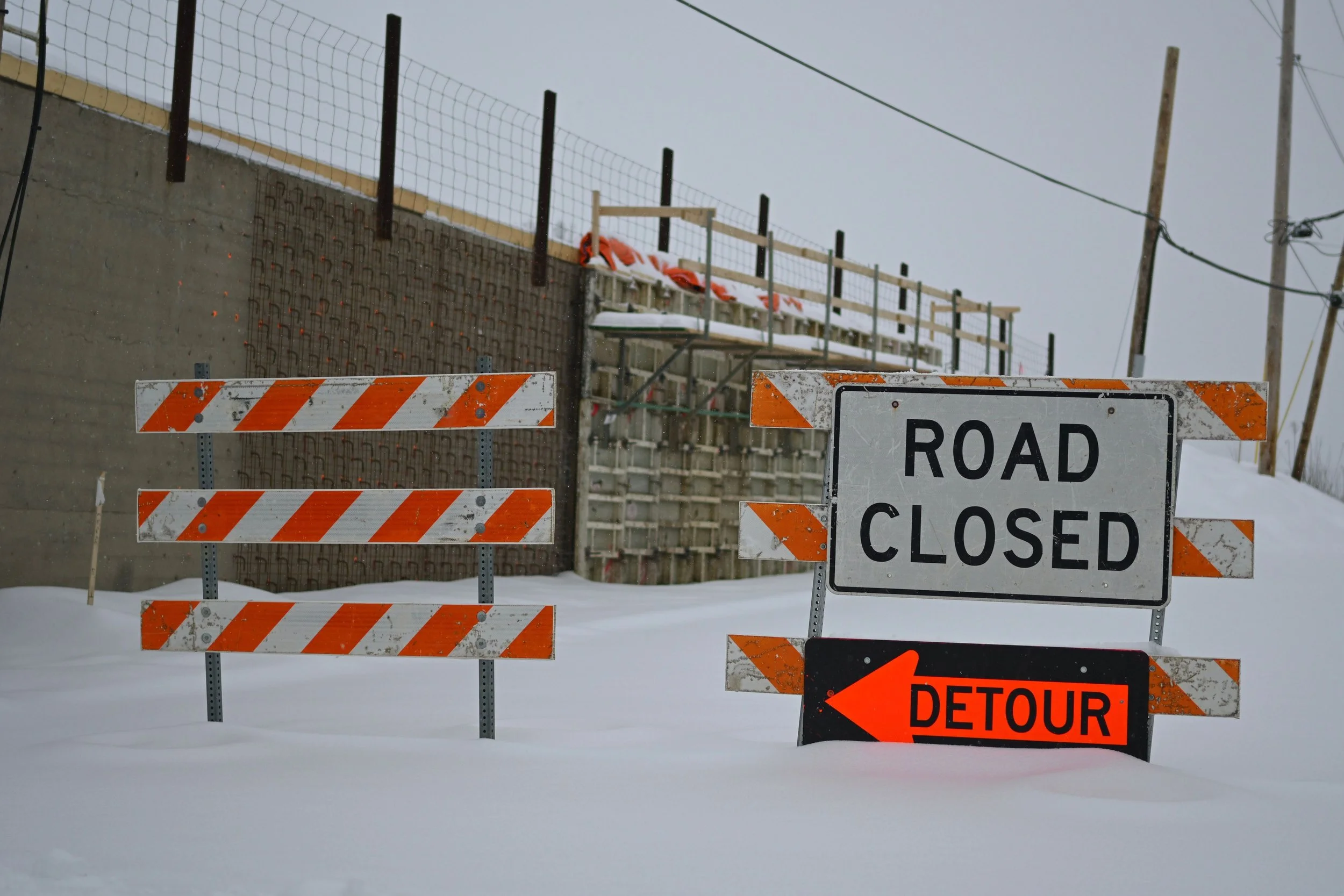
Alberta's construction season slows down in winter, but utility repairs, emergency work and road maintenance keep going. The rules for a work zone stay the same all year. The conditions they're applied in don't. A setup that worked well in July can leave drivers and workers with less margin in December. This guide covers what changes in winter and what to plan for before the first snowfall.
The standards stay the same in winter
Alberta's Traffic Accommodation in Work Zones manual sets minimum requirements for work on provincial highways, and the City of Edmonton's Manual of Temporary Traffic Control sets the standard on Edmonton roads. Sign spacing, taper lengths and buffer zones are set by the posted speed, and none of them change with the season.
Because they are minimums, a setup can comply and still give drivers less warning than winter conditions call for. Adding extra warning distance, larger signs or more lighting goes beyond the requirement, and it is often the right call. Alberta's highway specification, for example, allows larger or oversized signs where conditions call for greater visibility. Before you change an approved setup, check with the road authority, since permit conditions may require you to follow the plan as approved.
Snow and ice lengthen stopping distances
The City of Edmonton's winter road safety material shows a car at 50 km/h needing more room to stop on wet roads, more again on packed snow, and the most on ice. The City warns drivers that ice forms first on ramps, overpasses, bridge decks and shaded spots.
For a work zone, that means:
- Drivers need to see your advance warning signs earlier, and the signs need to stay readable.
- Work zones with approaches on bridges, overpasses or shaded curves deserve a closer look at warning distance.
- Flaggers need a clear escape route, because a vehicle that can't stop in time may slide past the stop point.
Shorter days make lighting part of the plan
In December, late-afternoon shifts end after dark across Alberta. The province's winter guidance for employers notes that shorter days increase the need for lighting, recommends placing lights so they don't cast shadows, and suggests scheduling large equipment moves for daylight hours.
For traffic control specifically:
- Alberta's OHS Code requires traffic controllers to wear retroreflective clothing and carry hand-held signal lights in darkness or poor visibility.
- On provincial highway contracts, flaggers working in darkness carry red signal wands, flagging stations get overhead lighting, and signs for hazardous conditions get flashers.
- Faded or dirty high-visibility apparel loses effectiveness at night. The highway specification requires flaggers' coveralls to be kept clean and replaced when faded, torn or dirty.
Keep signs and devices visible
Snowbanks and plow windrows can bury cones and block the lower part of a sign, and road spray coats sign faces quickly. Alberta's highway specification sets out practices that suit any winter work zone:
- Clean, repair or replace dirty or damaged signs without delay.
- Keep portable signs fully visible to oncoming traffic, with the bottom at least 300 mm above the road surface.
- Weight sign stands so wind and gusts from passing vehicles can't blow them over.
- Inspect signs and devices during inactive periods too, more often on busier roads, and record each inspection. On detours, inspections can be no more than six hours apart.
In winter, add an inspection after every snowfall and every plow pass, and make sure your crew knows who clears snow inside the work zone.
Cold is a hazard for flaggers too
Alberta's OHS legislation doesn't specifically address working in cold weather, but employers must still protect workers from it under their general duty in the OHS Act. The province recommends reviewing your hazard assessment before winter for seasonal hazards. Its suggested controls include:
- Giving workers time to adjust to cold before assigning a full schedule.
- Following a warm-up schedule that limits time outdoors between breaks.
- Shielding workers from wind where possible.
- Using a buddy system in very cold weather.
- Training workers to recognize frostbite and hypothermia.
- Wearing insulated, waterproof footwear with non-slip treads.
Flaggers stand in one place for long periods, so build warm-up breaks into the staffing plan. On a long shift in deep cold, that can mean scheduling relief so every station stays covered while someone warms up.
Winter shutdowns and short-notice work
- Pausing a project for winter. Alberta's highway specification requires a shutdown plan before any prolonged shutdown, submitted at least 14 days before it starts. The contractor stays responsible for snow removal and ice control within the site during the shutdown. Signs that are no longer needed are covered or removed.
- Emergency and unplanned work. On provincial highways, the province's manual allows generic traffic accommodation strategies for unplanned maintenance and emergency work. See What Is a Traffic Accommodation Strategy?
- Edmonton roads. OSCAM permit rules apply all year. Leave extra time for permit processing on winter jobs. See How to Get an OSCAM Permit in Edmonton.
Winter-ready checklist
- Review the hazard assessment and traffic plan for winter conditions.
- Plan lighting for flagging stations and the work area, and supply signal lights or wands.
- Check that high-visibility apparel is clean and in good condition.
- Weight sign stands for wind, and keep sign faces clear of snowbanks.
- Set an inspection schedule for after storms and plow passes, and record each inspection.
- Build warm-up breaks and relief into the traffic control staffing.
- Agree on who to call if conditions change overnight.
Winter traffic control from TrafficIQ
TrafficIQ provides traffic plans, certified traffic control persons and equipment for winter work in Edmonton and across Alberta, including short-notice and after-hours callouts. See Flagging & Site Services, add signs, cones and barricades through Equipment Rentals, or request a quote with your location, dates and shift hours. For flagger requirements in general, see When Do You Need a Flagger?
Last reviewed October 2026. This article is general information. Confirm requirements with the road authority for your site.
Sources: Government of Alberta, Working in winter (GS014); Alberta Transportation, Specification Section 01552; Government of Alberta, Traffic Accommodation in Work Zones; Alberta OHS Code, Part 12; City of Edmonton, Safe Roads: Winter.