
When Do You Need a Flagger? Traffic Control Person Requirements in Alberta
TrafficIQ · · 4 min read
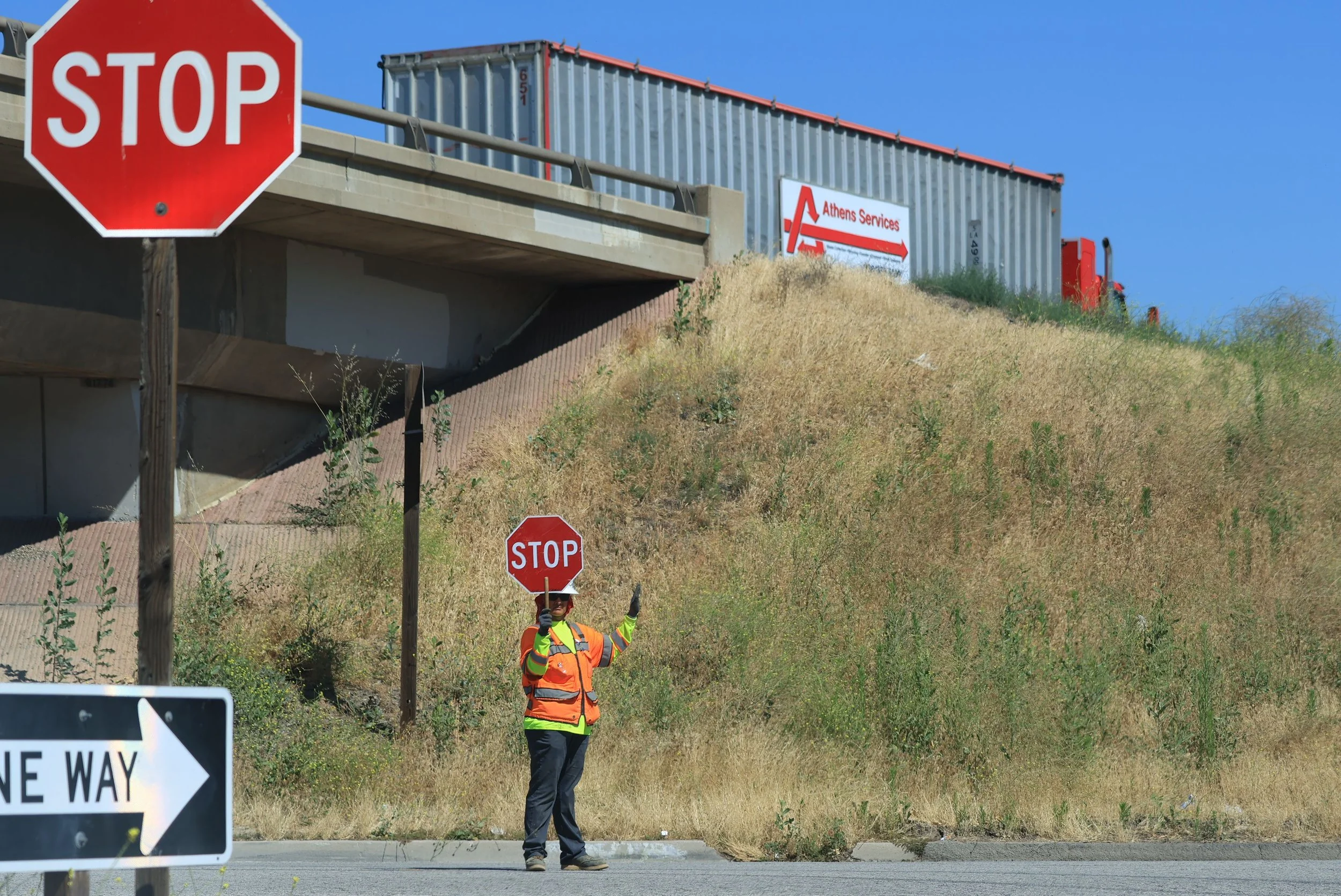
Signs and cones warn drivers about a work zone. Sometimes that isn't enough, and a person has to actively stop, slow and direct traffic. That person is a flagger, also called a traffic control person (TCP). This guide explains what Alberta law requires, the situations where a flagger is the right call, and what to check before you book one.
What Alberta law requires
Section 194 of Alberta's Occupational Health and Safety Code covers vehicle traffic control. When vehicle traffic at a work site is a hazard to workers, the employer must control that traffic to protect them. On public roads, that protection can include warning signs, barriers, lane control devices, flashing lights, pilot vehicles, remote-controlled traffic systems, and designated traffic controllers.
When an employer uses a designated traffic controller, the Code requires that:
- The worker is designated by the employer for that role.
- The worker wears highly visible clothing that clearly identifies them as a traffic controller, which must be retroreflective in darkness or poor visibility.
- The worker has hand-held signal lights when it is dark or visibility is poor.
- Workers are trained in the safety procedures for working around and controlling traffic.
When do you need a flagger?
The Code leaves the choice of controls to the employer, but in practice a flagger is usually needed when:
- Two-way traffic has to share one lane. Someone has to alternate the directions safely.
- The lane is narrowed or congested and drivers need more warning or direction than signs can give.
- Equipment or trucks enter and leave live traffic, such as haul trucks crossing a roadway or equipment working at the lane edge.
- Short-duration work happens where a full sign-and-device setup isn't practical.
- Pedestrians and cyclists need to be guided through or around the work area.
- Events close roads or create heavy vehicle and pedestrian movement at access points.
Your traffic plan decides where flaggers stand. On Alberta highway work, the province's Traffic Accommodation in Work Zones manual calls for flag persons where traffic needs greater warning or direction. In Edmonton, the City's Manual of Temporary Traffic Control includes standard drawings specifically for flagging and short-duration operations.
Flaggers vs. automated flagger assistance devices
An automated flagger assistance device (AFAD) is a remotely operated signal that stops and releases traffic, so the operator can stand back from the travel lane. AFADs can reduce a worker's exposure to traffic on long, steady closures. They still need a trained operator watching the site, and they don't replace a person where traffic has to be guided through complex movements, pedestrian areas or intersections.
Flagger certification in Alberta
Alberta's OHS Code requires training but does not name a single certification course. The rules tighten by road authority:
- Provincial highways: the Traffic Accommodation in Work Zones manual requires flag persons to be certified, with their certification readily available on site. AFAD operators need specific training on the device.
- Municipal roads: cities set their own expectations through their traffic control manuals and permit conditions.
- British Columbia: WorkSafeBC is more prescriptive. Traffic control persons must be trained in a way acceptable to WorkSafeBC and follow the provincial Traffic Control Manual.
If a job crosses jurisdictions, or a client asks for proof of certification, ask your traffic control company for current certificates before the first shift.
What a flagger needs on site
- High-visibility apparel that identifies them as a traffic controller. Highway work under the provincial manual has specified CSA Z96 Class 3 coveralls in fluorescent yellow-green with retroreflective striping.
- A STOP/SLOW paddle, and hand-held signal lights or wands after dark.
- Lighting at the flagging station for night work.
- Two-way radios where flaggers can't see each other, such as at opposite ends of a single-lane section.
- A clear escape route, and a position outside the travel lane wherever possible.
Before you book flaggers: a quick checklist
- Is there an approved traffic plan, and does it show flagging stations?
- How many stations are needed, and for how many hours per shift?
- Will work continue after dark, or run over multiple shifts?
- Who on your crew will the flaggers coordinate with?
- Do you need equipment (signs, cones, barricades) supplied too?
Certified TCPs from TrafficIQ
TrafficIQ supplies certified traffic control persons for job sites and events in Edmonton and across Alberta, with shift-to-shift coverage and after-hours availability. Our TCPs hold certification meeting Alberta OHS and WorkSafeBC standards. See Flagging & Site Services, add signs and barricades through Equipment Rentals, or request a quote with your location, schedule and crew size.
Last reviewed September 2026. This article is general information, not legal advice. Confirm requirements with the road authority for your site.
Sources: Alberta OHS Code, Part 12; Government of Alberta, Traffic Accommodation in Work Zones; WorkSafeBC OHS Regulation, Part 18.